AI Video Generators Compared: Veo, Kling, Seedance & More
There is no single best AI video generator in 2026. The honest answer is that the leading models each win at a different job, so the real skill is matching the model to the shot. Veo 3.1 is the most-cited all-rounder, Seedance 2.0 currently leads the public arenas, and Kling 3.0 owns long multi-shot cinematic work. Below is how they actually compare, with specs dated and sourced.
The short version
- No model wins everything. Pick per shot, not per project.
- Native synchronized audio used to be Veo's alone. It now ships in Veo 3.1, Sora 2, Kling 2.6+, Seedance 2.0, Runway Gen-4.5, and Wan 2.5+.
- MiniMax Hailuo still has no native audio through version 2.3. That is the sharpest line in the table.
- Seedance 2.0 tops the Artificial Analysis video arenas as of the April to May 2026 snapshot.
Version numbers in this space move every six to ten weeks, so treat any "current flagship" claim as a snapshot. Everything here is accurate as of June 2026; re-check the official source before you bet a deadline on a spec. With that caveat set, the useful way to read the field is by what each family is built to do well.
The models compared at a glance
The table below is the centerpiece. It lines up the major families on the four questions that actually decide a shot: what it is best at, whether it generates sound in the same pass, whether it animates a still image, and the current version with its standout spec. The "native audio" column is the one that has changed most in the last year, so it is worth reading first.
| Model | Best at | Native audio | Image-to-video | Current version, notable spec |
|---|---|---|---|---|
| Google Veo | Realism, lip-synced native audio, prompt adherence | Yes | Yes | Veo 3.1; 4K and 9:16 since Jan 13, 2026 (4K capped at 8s) |
| Kling | Multi-shot cinematic, camera and motion control | Yes (2.6+) | Yes | Kling 3.0 (O3 / Omni); up to 15s, 6-shot |
| Seedance | Multi-shot consistency, reference compositing, cinematic realism | Yes (2.0) | Yes | Seedance 2.0; up to 2K, 4 to 15s, multimodal inputs |
| Alibaba Wan | Strongest open-weights option, cinematic aesthetics | 2.1 / 2.2 no; 2.5+ yes | Yes | Wan2.6 (closed); Wan2.2 latest open-weight |
| MiniMax Hailuo | Physics, micro-expressions, live-action faces | No (through 2.3) | Yes | Hailuo 2.3; 1080p capped at 6s, 768p does 10s |
| OpenAI Sora 2 | Physics and world-state, cameo social features | Yes | Yes | Sora 2 / 2 Pro; up to 20s, Pro to 1080p |
| Runway | Motion quality, references, longer multi-shot | Yes (Gen-4.5) | Yes | Gen-4.5; up to ~1 minute multi-shot |
Three things in that table do most of the work. First, native audio is now common but not universal, and the gaps are version-specific rather than vendor-wide. Second, every serious model now does both text-to-video and image-to-video, so the differentiator has moved to control, length, and consistency. Third, the open-weights story is narrower than the marketing suggests, which the Wan section below unpacks.
Google Veo: the audio pioneer and default all-rounder
Veo is the model most teams reach for first, and native synchronized audio is the reason. Veo 3 was Google's first model to generate dialogue, sound effects, ambience, and music jointly with the video in a single pass; DeepMind framed it as the end of "the silent era of video generation" (TechCrunch, May 2025). Veo 2 was silent, so this was a genuine break rather than an incremental bump.
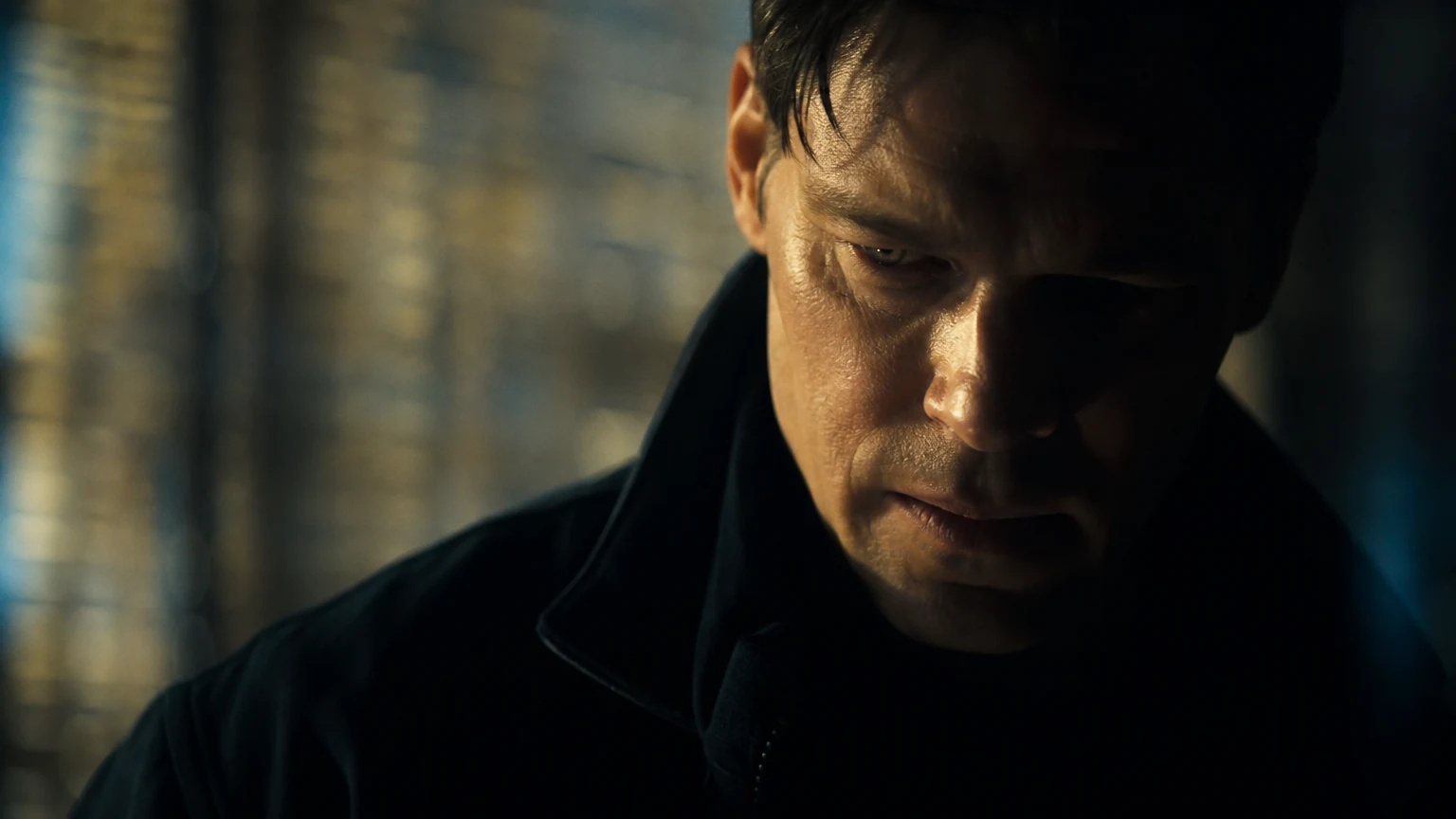
Veo 3.1, released October 15, 2025, pushed audio into the editing features (Frames to Video, Extend, Ingredients to Video) that previously had none, and added camera and motion controls (Google Developers Blog, Oct 2025). It later gained 4K output and native 9:16 vertical in a January 13, 2026 update, though 4K and 1080p are limited to 8-second clips (TechCrunch, Jan 2026). One nuance worth keeping straight: Flow's Insert and Remove object-editing feature runs on the older Veo 2 model and does not generate audio.
Veo 3.1 snapshot
Where Veo earns its place is dialogue and lip-sync, physics, and shots where production value carries the video. Extend lets you chain clips by seven seconds per pass, up to twenty times, for a combined output near 148 seconds (Google AI for Developers). It is not the cheapest option, and at the eight-second base clip it is shorter than Kling or Seedance per generation, but for a hero shot that needs to sound right out of the box, it is the safe call.
Kling: multi-shot cinematic and camera control
If a shot lives or dies on its camera move, Kling is the one to try first. Camera and motion control plus multi-shot direction has been its consistent strength across every version, and the Kling 3.0 family (also called O3 or Omni), released February 4 to 5, 2026, leans hard into "intelligent multi-shot storytelling" with up to six shots, each carrying its own prompt and duration (fal.ai, Feb 2026). It runs up to fifteen seconds per generation, the longest single clip among the premium closed models here.
Kling was a relative latecomer to audio. Kling 2.5 and earlier had none; Kling 2.6, released December 3, 2025, was the first to generate synchronized audio and video in one pass (PR Newswire, Dec 2025). The 3.0 family adds native lip-sync and voice binding for consistent character voices across Chinese, English, Japanese, Korean, and Spanish, with American, British, and Indian accents (Kuaishou IR, Feb 2026).
One spec to ignore: SEO blogs claim Kling 3.0 video does native 4K. That figure belongs to Kling's separate still-image model. The video model is 1080p, and no first-party source confirms 4K for video, so treat Kling video as 1080p until that changes. For long cinematic sequences, camera moves, and reusable character "elements," though, it is the strongest tool in this group.
Seedance: the consistency and compositing leader
ByteDance's Seedance 2.0 is the model currently sitting at the top of the public benchmarks, and its edge is consistency across cuts. It holds character, style, and atmosphere across multiple shots inside a single generation using a "Shot 1 | Shot 2" syntax, which is its stated advantage over Veo 3 and Sora 2 at comparable durations (Segmind, 2026). It launched in China in February 2026 and globally in April 2026.
Seedance 2.0 is multimodal in the literal sense: text, image, audio, and video can all go into one request, and its "Omni-Reference" system accepts up to nine reference images, three reference videos, and three reference audio clips (ByteDance Seed, 2026). It generates native synchronized stereo audio with phoneme-level lip-sync across eight or more languages, runs four to fifteen seconds, and reaches 2K at its Cinema tier. If your work depends on bringing your own characters and footage into a scene and keeping them consistent, this is the model to learn. Note that the absolute Elo numbers on the arena drift as new models are added, so trust the relative ranking over the score.
Alibaba Wan: the open-weights workhorse, with a caveat
Wan is the model people mean when they say "open-source AI video," and that label is only half right. The open-weight lineage stops at Wan2.2 (late July 2025), which is Apache 2.0 on GitHub and self-hostable. Everything newer, Wan2.5, Wan2.6, and the April 2026 Wan2.7, is closed and API-only through Alibaba Cloud, with no public weights released as of April 2026 (Spheron, 2026). And Wan2.7 is an image model, not video, so the latest Wan video model is Wan2.6.
Audio follows the same version split. Native audio generation starts at Wan2.5; the open Wan2.2 and earlier are silent. A common confusion is worth clearing up here, because it trips up almost everyone.
On quality, the old "Wan2.1 tops VBench" line from early 2025 is stale. On the live Artificial Analysis arena in June 2026, Wan 2.7 sits around rank four for image-to-video and rank nine for text-to-video, behind Seedance, Kling, and Veo, with older Wan versions out of the top twelve (Artificial Analysis, Jun 2026). For a self-hosted pipeline, Wan2.2 is still the strongest practical choice; for hosted quality, the closed tiers compete but no longer lead.
MiniMax Hailuo: realism and faces, no native audio
Hailuo is the clearest outlier in the table, and it is on the audio column. Through Hailuo 2.3, released October 28, 2025, the model does not generate native audio at all: no sound, dialogue, or music in the generation pass (EdenAI, May 2026). What it is genuinely good at is human realism. The 2.3 release explicitly targets live-action facial performance and micro-expression changes, and earlier Hailuo 02 was praised for physics at native 1080p (MiniMax, Oct 2025).
The trade-offs are concrete. Hailuo 02 and 2.3 cap 1080p at six seconds, while 768p supports both six and ten seconds. Director control is real, with dedicated models that accept bracketed camera instructions like [Push in], and subject reference produces consistent video from a single image. A widely repeated "Hailuo 3.0" with 4K and audio comes from an unofficial third-party GitHub and is unconfirmed, so do not plan around it. Reach for Hailuo when a shot is about a believable human face and you intend to add the audio separately anyway.
Sora 2 and Runway: the context picks
Two more models belong in any honest comparison even if they are less often the day-to-day workhorse. OpenAI's Sora 2, announced September 30, 2025, is built around physical accuracy and world-state: it models failure states, so a missed basketball shot rebounds off the backboard instead of warping into the hoop (TechCrunch, Sep 2025). It added native synchronized audio (Sora 1 was silent), supports up to twenty-second clips, and its signature is "cameos," inserting yourself into a scene via a one-time in-app recording rather than a photo upload (OpenAI docs).
Runway's latest is Gen-4.5, not Gen-4. It added native audio and Runway's first world model on December 11, 2025, and with audio it supports up to one-minute multi-shot generation with character consistency (TechCrunch, Dec 2025). Runway self-reports a #1 spot on the Artificial Analysis text-to-video benchmark at 1,247 Elo, but that claim conflicts with the live arena that shows Seedance on top, so treat it as single-source until reconciled (Runway Research, Dec 2025). Both are top-tier, and Runway's References feature is a real consistency tool for client work.
Match the model to the shot, not the project
The strongest editorial consensus in this space is that the old question, "which model is best," stopped being useful. As one widely cited 2026 roundup put it, "there is no single best AI video model in 2026. There's a best model per job, and the cost gap between them is the main budgeting lever" (Higgsfield, 2026). The practical version of that advice is a routing table you build once and reuse.
That is also where the practical friction shows up. Using the best model per shot means signing up for and paying several vendors, learning several interfaces, and shuttling files between them. Some workspaces aggregate Veo, Kling, Seedance, Wan, and Hailuo under one subscription and one credit balance, so you can switch the underlying model per shot inside a single AI video generator rather than juggling tools. If you are building longer narrative work, that routing matters even more, where one project will reasonably touch three or four models.
Frequently asked questions
What is the best AI video generator in 2026?
There is no single winner. Veo 3.1 is the most-cited all-rounder for realism and audio, Seedance 2.0 leads the Artificial Analysis arena, and Kling 3.0 is the multi-shot and cinematic pick. Runway Gen-4.5 and Sora 2 are also top-tier. The best model depends on the specific shot, your budget, and your duration and audio needs.
Is there an AI that makes videos with sound?
Yes. Google Veo 3.1, OpenAI Sora 2, Kling 2.6 and later, Seedance 2.0, Runway Gen-4.5 (since December 11, 2025), Alibaba Wan 2.5 and later, Vidu Q3, and LTX-2.3 all generate native synchronized audio (dialogue, sound effects, ambience, music) from one prompt. MiniMax Hailuo does not, through version 2.3.
Veo vs Kling: which is better?
They optimize for different jobs. Veo 3.1 wins on realism, native audio, and lip-sync, making it the pick for dialogue and hero shots. Kling 3.0 wins on longer clips (up to 15 seconds), multi-shot storyboards, and camera and motion control. Most professionals use both, routing each shot to the stronger model.
Which model has the best character consistency across scenes?
Seedance 2.0 leads here. It accepts up to nine reference images, three reference videos, and three reference audio clips per generation, and holds character, style, and atmosphere across cuts. Runway Gen-4.5 References is the other strong option for client work, and Kling is reliable for human characters specifically.
What is the longest AI video clip you can generate?
Most premium models cap a single clip near 10 to 15 seconds; Kling 3.0 and Seedance 2.0 reach 15. Runway Gen-4.5 supports up to about one minute of multi-shot output, and Veo 3.1 can extend a clip to roughly 148 seconds across passes. Vidu Q3 does 16 seconds with audio, and LTX-2.3 reaches about 20.
What is the best open-source AI video model?
For self-hosting, LTX-2.3 from Lightricks, Tencent HunyuanVideo, Genmo Mochi 1, NVIDIA Cosmos3, and Alibaba Wan 2.2 are the practical choices. Note that Wan 2.5 and later are closed and API-only, despite the family's open reputation, so only Wan 2.2 and earlier carry public weights you can run yourself.